

Nature
Education
Online Course
March 2 – March 29, 2026
-
Duration: 4-week online course (Mar 2–29, 2026).
-
Certificate: Cornell University certificate (PDF), documenting 25 professional development hours.
-
Audience: Educators, community leaders, parents, volunteers, and nature enthusiasts worldwide.
-
Focus: Research-informed nature education that supports well-being, learning, and stewardship.
-
Approaches: Explore models such as unstructured outdoor play, forest schools, citizen science, and nature center / park programs.
-
Final project: Create a practical nature education lesson plan (or program activity plan) for your setting.


Why take this course?
Nature education helps people reconnect with the living world, especially in an era of rapid urbanization and busy, indoor lives. This course supports you to design meaningful nature experiences that are realistic for your context, whether you work in schools, parks, community settings, or at home.
This course helps you:
-
Understand what research says about nature’s benefits for health and well-being.
-
Compare major nature education models and decide what fits your learners and setting.
-
Strengthen your practice with concrete strategies for safety, inclusion, and engagement outdoors.
-
Apply ideas immediately by building a lesson plan or program activity you can implement.
-
Connect with a global learning community to exchange ideas, tools, and resources.


What you will do
Using your own program (or a program idea), you will:
-
Learn from publications, discussions, and real-world examples across multiple nature education approaches.
-
Identify the experiences and outcomes you want to support (for learners, families, and communities).
-
Design a nature education lesson plan or activity sequence for your setting.
-
Share drafts and ideas in online discussions for peer and instructor feedback.
-
Submit a short final project outlining your lesson plan and practical next steps.
Participant Quotes
An excellent starting point, with strong readings, engaging webinars, and helpful office hours.
A deep dive into the learning contexts that shape nature education.
This course delivered on its promise, especially through the meaningful interaction with other participants.
Seeing green spaces from around the world was inspiring, and I loved how actively I engaged with the materials.
A real mind- and eye-opener. I’ve already started applying the concepts in my daily activities.
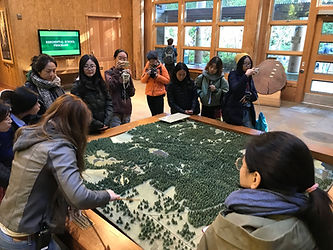

Course experience
-
Format: Asynchronous weekly modules (videos, readings, and discussion prompts) plus an optional live webinar.
-
Optional webinar: Wednesdays, 9:00–10:00 a.m. New York time, recorded for those who cannot attend live.
-
Workload: About 4–5 hours per week for 4 weeks, plus an additional week to complete and submit the final lesson plan (~25 hours total).
-
Technology: Course modules and discussions are hosted in EdX Edge. Live sessions use Zoom.
-
Learning approach: Social learning, reflection, and practical application. In addition, participants learn by exchanging resources and adapting ideas to their local context.


Is this course for me?
No prior background in nature education is required. The course is open globally. This course is designed for:
-
School, informal, and community educators who want to bring more nature into learning.
-
Nature center, park, museum, zoo, aquarium, and garden staff strengthening outdoor programming.
-
Community leaders and volunteers supporting local stewardship and nature-based activities.
-
University students and early-career professionals building a foundation in nature education.
-
Parents and caregivers who want practical ways to support children’s connection with nature.
Meet your course team
The course is offered by the Cornell Civic Ecology Lab, with support from researchers, graduate students, and teaching assistants who help facilitate discussions, workshops, and participant support.

Fish Yu (Cornell University, Department of Natural Resources and the Environment) is the lead instructor. Fish recently graduated from Cornell University with a Master's degree. He has worked with nature educators in urban communities internationally.

Professor Marianne Krasny (Cornell University, Department of Natural Resources and the Environment). Marianne is a widely cited scholar in environmental education and civic ecology and the author of multiple books, including research articles that informed this course.

Alex Kudryavtsev (Cornell University, Department of Natural Resources and the Environment). Alex is a sustainability education and urban environmental education researcher. One of his published articles describes a framework of nature education.

Hamid Nikzad (Cornell University, Department of Natural Resources and the Environment). Hamid is a graduate student in our department. He conducts research on agriculture, human well-being, and climate change. He serves as the course administrator, and will be happy to answer your questions.
Tuition
We use tiered pricing to keep the course accessible to educators worldwide while covering course development and facilitation costs. A limited number of competitive, need-based scholarships will be available.
-
$90 – Standard fee – Participants residing in the United States, Canada, European countries, Japan, South Korea, Singapore, Mainland China, Taiwan, Israel, Australia, and New Zealand.
-
$20 – Reduced fee – Participants residing in all other countries.
-
Competitive scholarship – Apply by 11:59pm ET, February 24, 2026 (awards announced on February 27, 2026). Complete this Word document before registering for the course. You will save this file as PDF, and upload it as part of the online registration.
Credential
Participants who complete the course requirements (weekly work plus final project) will receive a Cornell University certificate in Nature Education (PDF) documenting 25 professional development hours.

Questions?
Contact our course administrator at CivicEcology@cornell.edu and include “NE” in the subject line.
We look forward to learning with you and to supporting your efforts to design environmental education programs that create meaningful outcomes for people, communities, and the environment.